California Superbloom Guide for Photographers (2026)
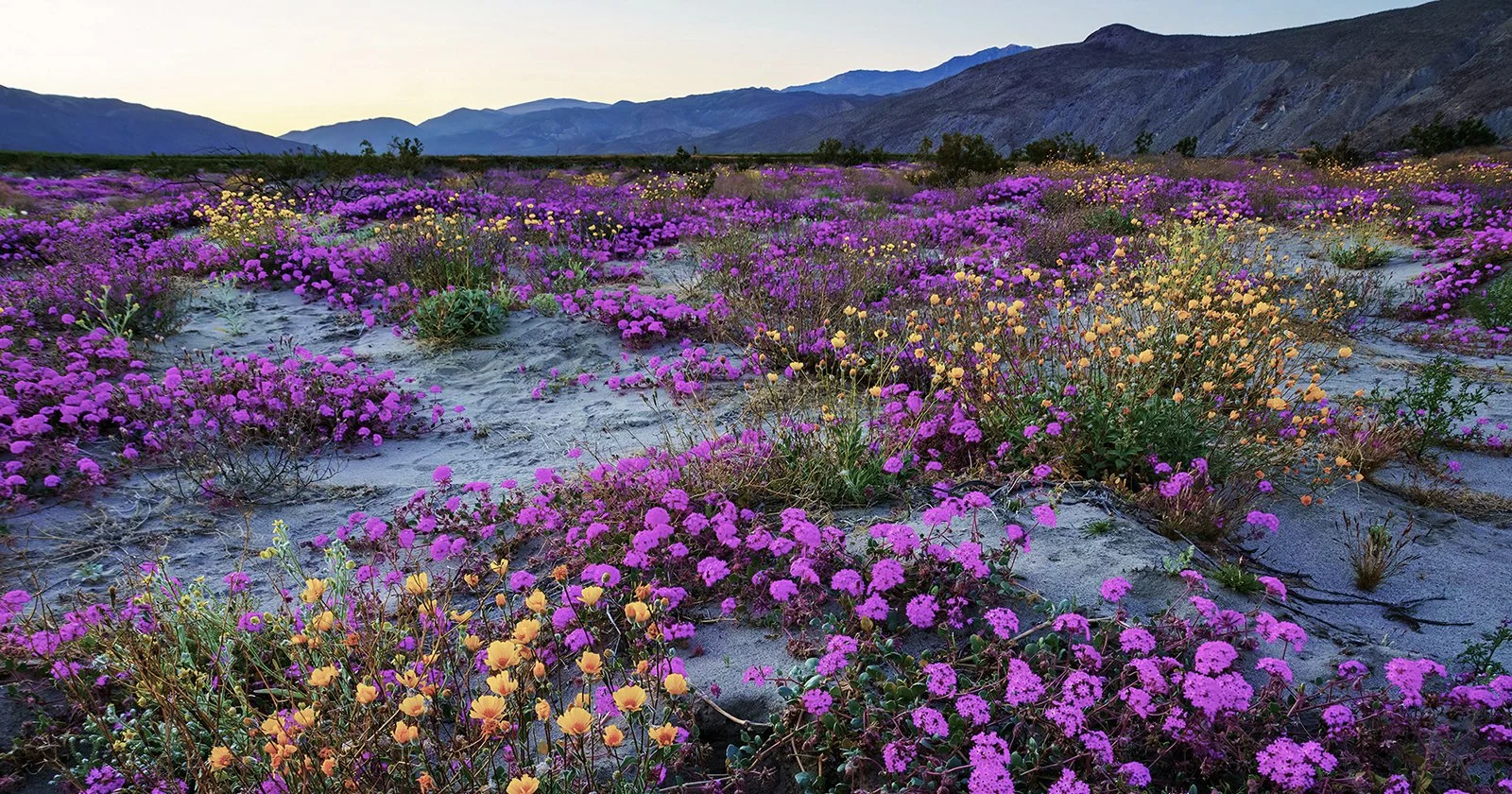
California’s wildflower superblooms are among the most spectacular natural photography opportunities in North America. When winter rains align with warm spring temperatures, normally quiet landscapes erupt into vibrant carpets of orange, yellow, purple, and white flowers stretching across deserts, grasslands, and coastal hillsides.
For photographers, timing and preparation are everything. The bloom moves north and uphill through the season, meaning the best locations change from February through May. This guide covers where to go, what flowers to photograph, and the gear and planning tips that help photographers capture the most dramatic images.
What is a California Superbloom?
A superbloom occurs when unusually favorable weather conditions—typically strong winter rainfall followed by mild spring temperatures—trigger massive wildflower germination. Seeds that may have remained dormant for years suddenly bloom across large areas at once.
While smaller blooms happen every year, a true superbloom is rare and can transform entire landscapes into fields of color visible for miles. These events can attract huge crowds, making planning essential for photographers who want the best light and fewer people in their frames.
Why Camping is Ideal for Wildflower Photography
While many superbloom locations are reachable as day trips from cities like Los Angeles or San Diego, photographers often get significantly better results by camping nearby.
Sunrise Access
The best wildflower photos often happen right after sunrise when the light is soft and warm. Camping nearby allows photographers to reach trailheads before crowds arrive and before harsh midday sunlight flattens color and contrast.
Sunset and Golden Hour
Evening light brings warm tones that make flowers appear richer and more saturated. Being nearby means you can stay through sunset without worrying about long nighttime drives back to a hotel.
Night Sky Opportunities
Many superbloom destinations are located in remote deserts with extremely dark skies. Camping allows photographers to capture unique images of wildflowers beneath the Milky Way—something nearly impossible if you must drive hours back to a city.
Early Bloom Timing
Some species, particularly desert flowers, close later in the afternoon. Photographers who arrive early in the morning often see more open blooms than those visiting midday.
Popular camp-friendly areas include:
Borrego Palm Canyon Campground in Anza-Borrego Desert State Park
Campgrounds near Antelope Valley California Poppy Reserve
Dispersed camping areas around Carrizo Plain National Monument
Essential Camera Gear for Wildflower Photography
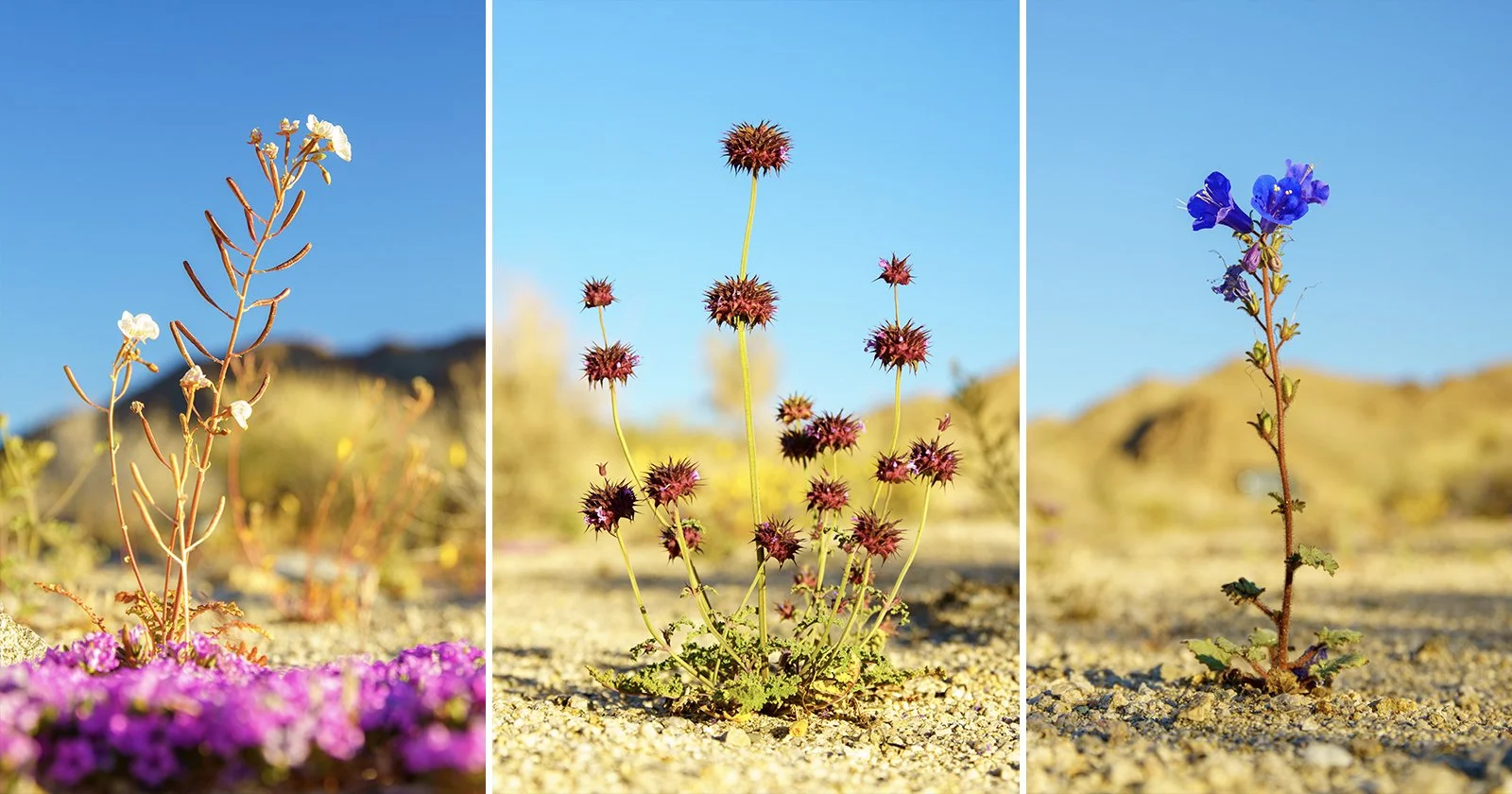
Superblooms present a wide range of photographic opportunities—from macro details to sweeping landscapes—so versatile gear is helpful.
Wide-Angle Lens
A wide lens (14–24mm or 16–35mm) is ideal for capturing expansive hillsides blanketed with flowers. Shooting low to the ground with a wide lens exaggerates depth and creates dramatic foregrounds.
Telephoto Lens
A 70–200mm or longer lens helps isolate patches of color or compress layers of flowers across hillsides. It is also a great idea to look for compositions that include wildlife in the flowers!
Macro Lens
Many wildflowers are small but incredibly detailed. A macro lens allows photographers to capture textures, pollen structures, and tiny insects interacting with flowers.
Tripod
A tripod is essential for:
Sunrise and sunset exposures
Focus stacking for macro images
Night sky photography
Filters
Circular polarizer: enhances color saturation and reduces glare from leaves
Neutral density filters: allow long exposures for creative compositions
Extra Batteries and Memory Cards
Remote bloom locations often lack power access, making spares critical.

What Else to Bring (Beyond Photo Gear)
Wildflower trips often involve remote landscapes with limited facilities. A few non-photography essentials can make the experience far more comfortable.
Sun Protection
Wide-brim hat
Sunscreen
Sunglasses
Desert bloom areas can become very hot by midday.
Plenty of Water
Many superbloom destinations are far from services. Carry more water than you think you need, especially in desert environments.
Snacks or Meals
Food options are limited near many wildflower areas, particularly in places like Carrizo Plain.
Paper Maps
Cell service can disappear quickly in rural regions. Printed maps or downloaded offline maps can prevent navigation problems.
Small Ground Pad or Knee Pads
Wildflower photography often requires getting low to the ground. Pads keep you comfortable and protect fragile plants from accidental contact.
Binoculars
Useful for spotting wildlife, birds, or distant flower patches across valleys.
Top California Superbloom Locations (and What to Photograph)
Early Season: Anza-Borrego Desert
Best time: Early February to mid-March
Two hours east of San Diego, Anza-Borrego Desert State Park is typically the first location in California to bloom.
Photographers can explore Henderson Canyon Road where vast patches of flowers appear across the desert floor.
Flowers to photograph:
Sand verbena (pink-purple clusters)
Desert lily
Evening primrose
Morning visits are best since some species close later in the day.
Desert Color Explosion: Death Valley
Best time: Mid-February to early April
A superbloom in Death Valley National Park is rare but unforgettable. When winter rains arrive, the desert floor along Badwater Road fills with bright yellow and purple flowers.
Flowers to photograph:
Desert gold
Purple phacelia
Gravel ghost
Low-elevation areas tend to bloom first and offer the densest displays.
Coastal Bloom Zones: Santa Monica Mountains
Best time: Early March to April
After wildfires, landscapes in the Santa Monica Mountains National Recreation Area can erupt with “fire follower” plants that depend on burned soil to germinate.
Parks like Malibu Creek State Park and Point Mugu State Park offer coastal wildflower scenes mixed with ocean views.
Flowers to photograph:
Fire poppies
Mariposa lilies
Lupine
California’s Most Famous Wildflower Field: Antelope Valley
Best time: Mid-March to May
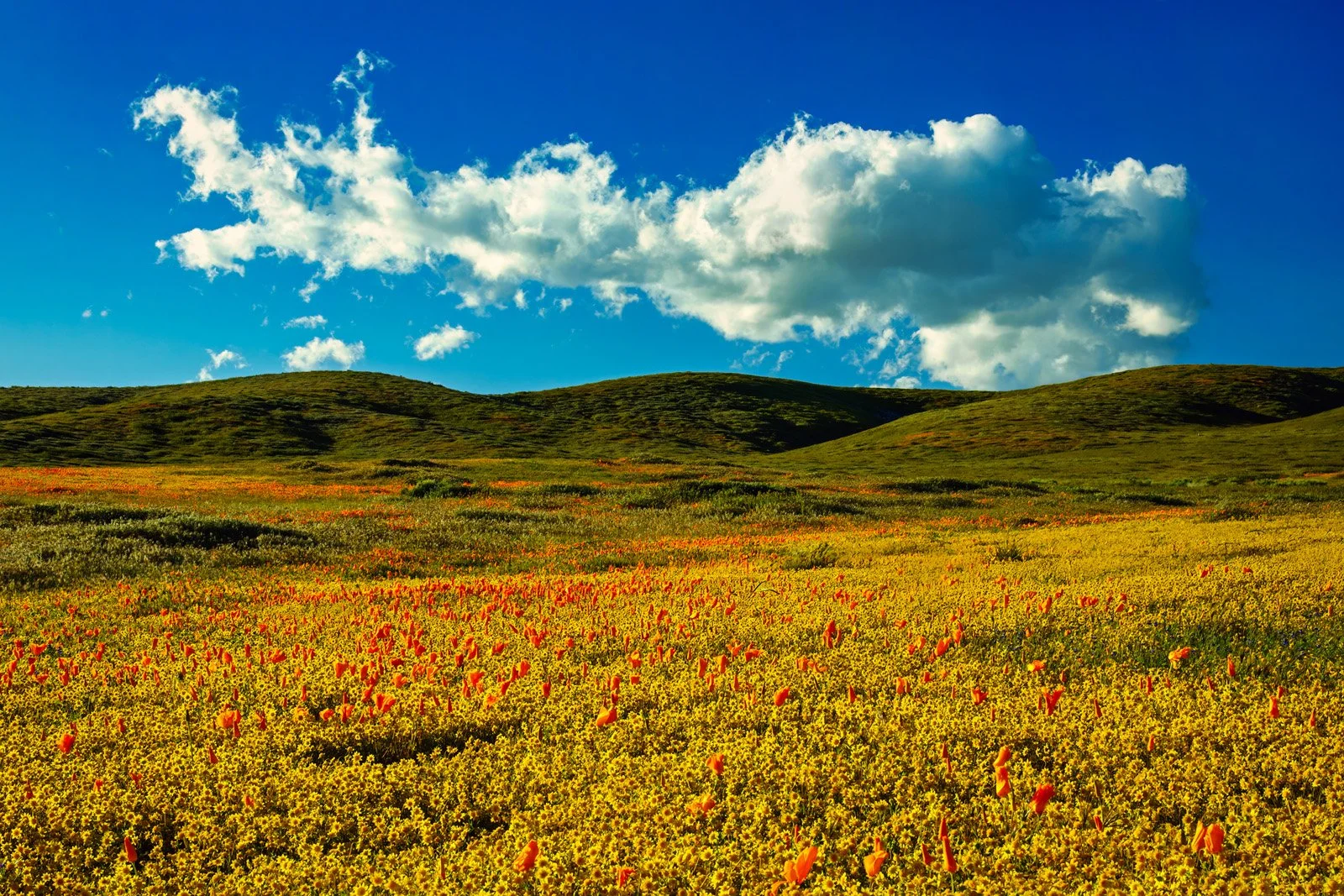
The rolling hills of Antelope Valley California Poppy Reserve are one of the most reliable locations for dramatic poppy displays.
When conditions are right, entire hillsides turn bright orange with poppies.
Flowers to photograph:
California poppies
Goldfields
Early morning visits are best since poppies close in cooler or windy conditions.
Remote Superbloom Paradise: Carrizo Plain
Best time: Late February to early April
Carrizo Plain National Monument is California’s largest remaining native grassland and a spectacular superbloom location.
Photographers often capture dramatic bands of different flower colors stretching across the plain.
Flowers to photograph:
Hillside daisies
Goldfields
Owl’s clover (pink and purple bands)
Expect gravel roads, minimal services, and little cell signal.
Waterfalls and Wildflowers: North Table Mountain
Best time: Late March to May
The volcanic plateau at North Table Mountain Ecological Reserve offers one of the most unique bloom settings in California.
Spring rains produce seasonal waterfalls spilling over the mesa edges while wildflowers fill nearby meadows.
Flowers to photograph:
Sky lupine
Goldfields
Dense yellow wildflower mats near waterfall pools
The reserve has unfenced cliff edges, so caution is important while photographing near waterfalls.
Responsible Photography During a Superbloom
Superblooms attract huge crowds, and responsible behavior helps protect fragile ecosystems.
Follow these guidelines:
Stay on designated trails
Avoid stepping into flower fields
Never pick wildflowers
Pack out all trash
Respect closures and park rules
Practicing Leave No Trace ensures that these rare natural events can continue for future visitors and photographers.